2026-07-22
Gnothi Seauton: BlockChain for Bond Tracking (2019)
Gnothi Seauton: BlockChain for Bond Tracking (2019)
The Context
One year after my previous hackathon (where I won the third prize with my machine learning application), another hackathon was organized conjointly by Sia Partners, HSBC & Crédit Mutuel (consulting firms and banks in France) and I immediately decided to participate again with another comrade (Nicolas T).
This time the challenge was about imagining a solution for the ‘bank of the future’ and I decided to create a project around blockchain. There was two reasons for that: the first one is that despite the fact that I knew the blockchain technology, how it works, I’ve never programmed in it and the other reason was that I wanted to build a real web application and to increase my level in Javascript !
So I decided to create an application which allows to register companies, assign bonds to them and track the history of those bonds on a blockchain application. The first challenge was to ramp into the blockchain technology. I had no clue where to go so I firstly looked at all the possible technologies (Ethereum, private / public blockchain) and decided to choose Hyperledger (a private blockchain designed mostly by IBM) as it was convenient for the problem.
The tutorial about Ethereum Ledger is pretty straightforward and easy to understand and it actually allows you to create step-by-step a prototype of the blockchain on your personal computer. The rest was mainly to design your contracts, the bonds and also the application itself.
I have never created such a big web application before (mostly because my education languages were mainly C, Java and Python) so Angular was a new thing for me. However, tutorial is quite well written and the learning curve for Angular is not too steep so after one week-end I was able to create the full website. I wrote two versions of the application, the first one was online and was using Firebase for the user authentication and the history of contracts (so it was mainly CRUD on a Database) while the other one was local and was requesting and reading the information from the Hyperledger server (so it was working on a real blockchain deployed locally !).
Now let’s see it how the application works.
The goal of the application was to manage the creation and the exchange of bond between
companies. Imagine that your an NGO who wants to implement into a country with lot of corruption
and you want the guarantee that your funds are not used by terrorist companies and malicious
groups.
Basically you want to enforce the control on your blockchain and keep track on the exchange of
funds and bonds to avoid fund evasion. Participants of the blockchain network can only exchange
funds within the network, the schema below describes the functioning of the application:
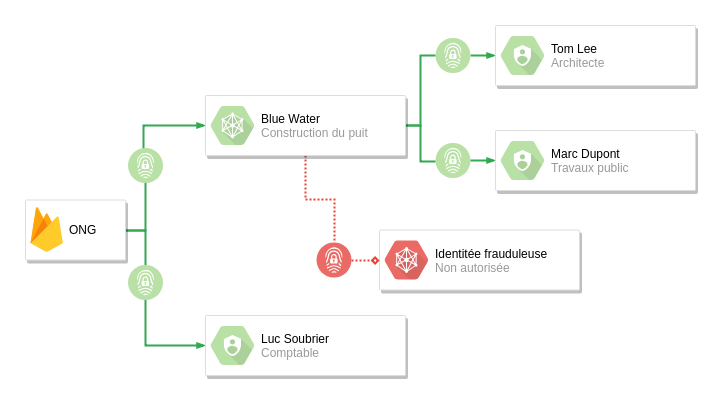
Funds can only be exchanged within the network.
The first thing that you do is to logging as an administrator and decide which company you want to add to the blockchain and how to allow your funds to these companies (here funds are represented as bonds):
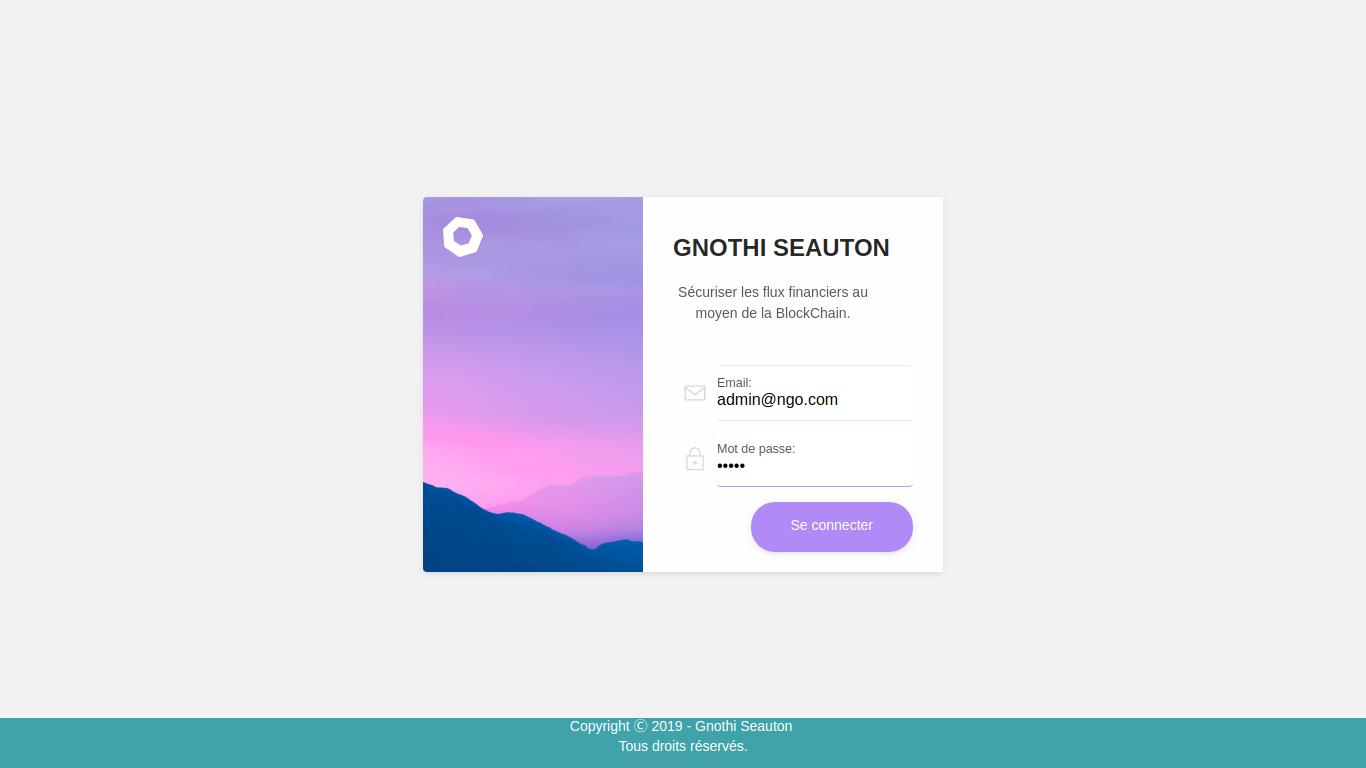
You first logging as an administrator.
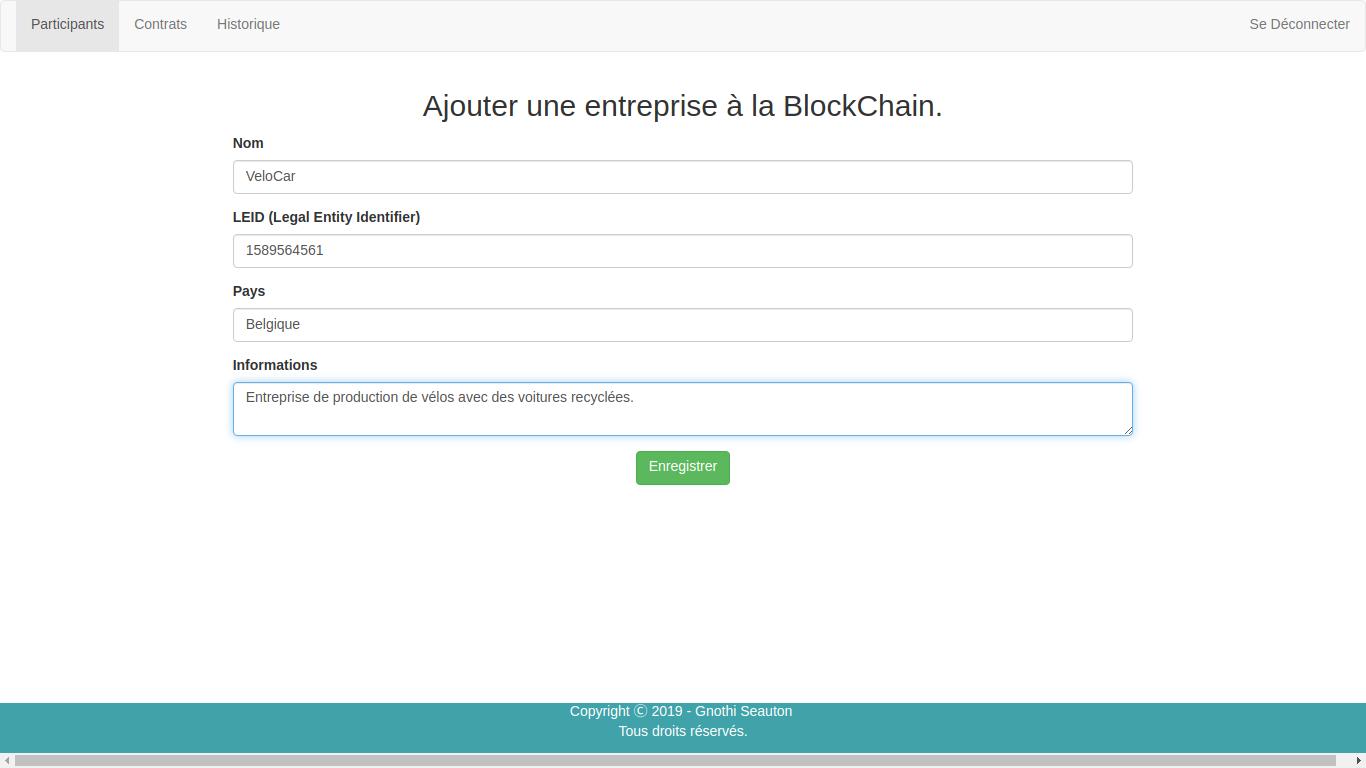
Add a company to the network…
You then can create bonds and assign them to the company of your choice. Once it is done, you can consult the history of transactions and check that everything is registered on the blockchain network.
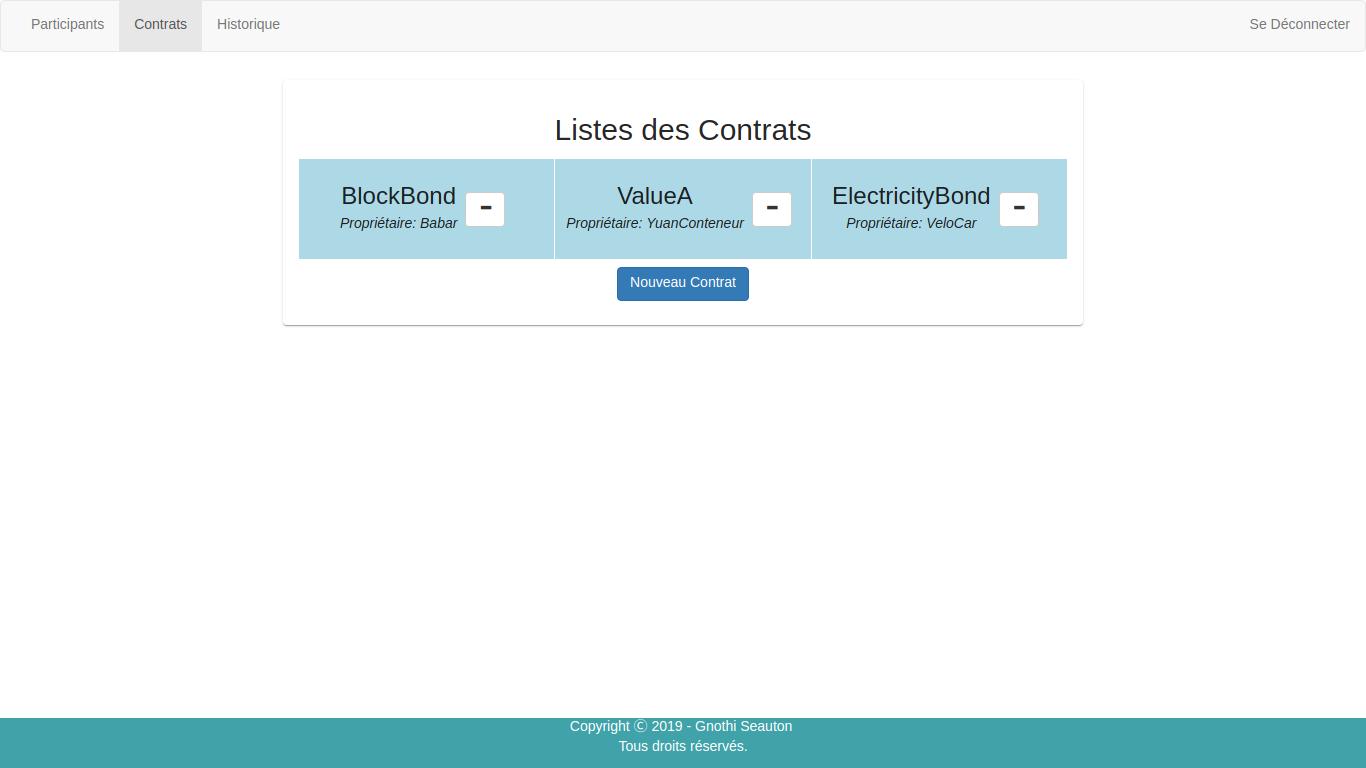
The list of bonds
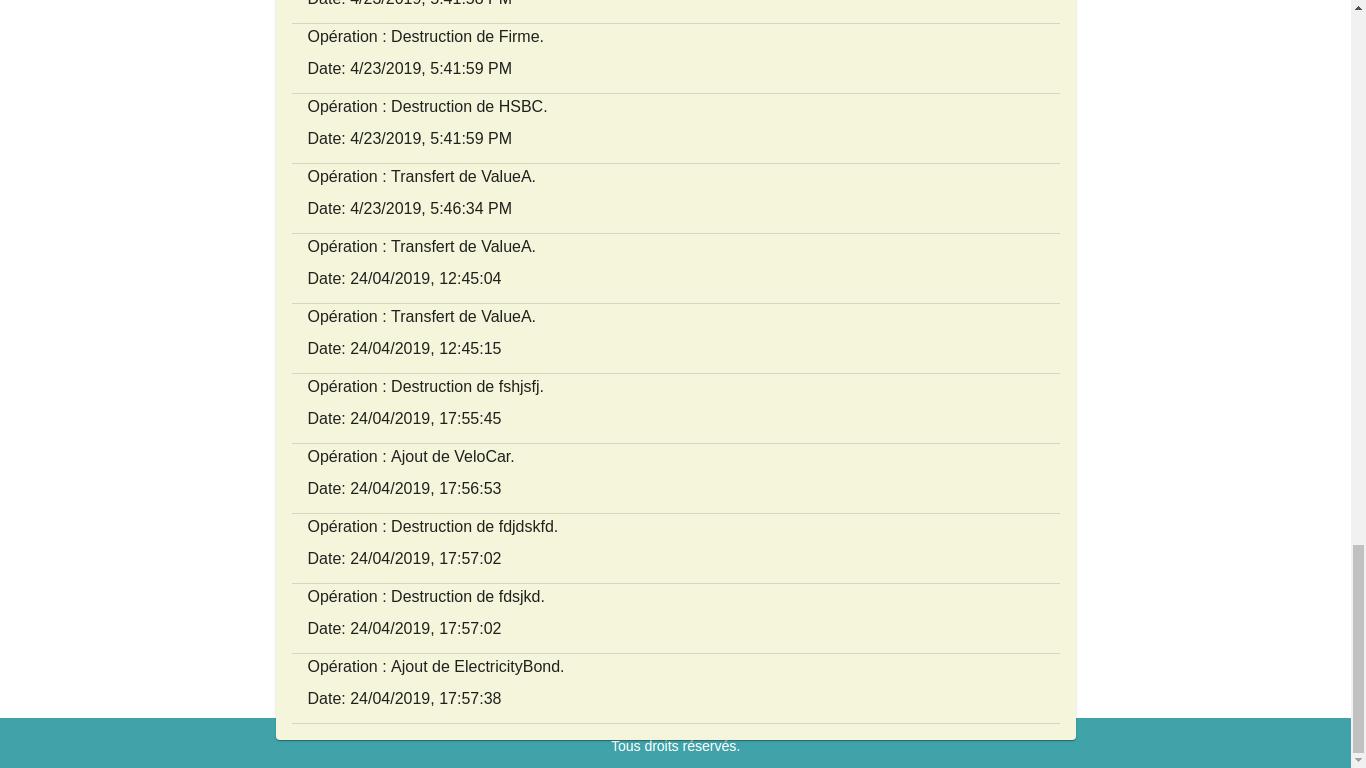
Every transactions is registered on the network.
Once it has been done, you can now log out and logging again but this time with a user account
(an account of a company within the blockchain for example).
When you are logging as a user, you cannot consult the history of all transactions but
you can for example exchange your funds to another company or you can also request to
add a new company (for example a new material suppliers of your company).
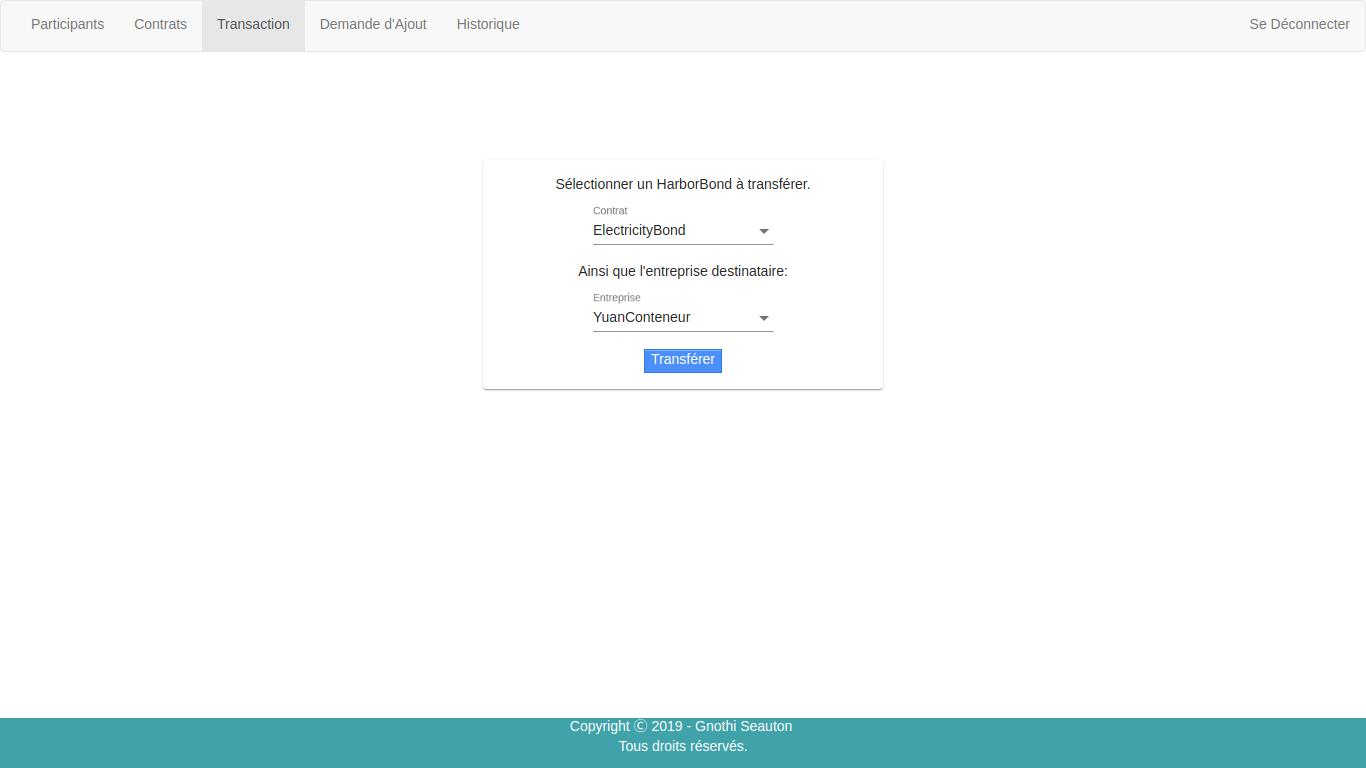
Select a bond and the company to transfer.
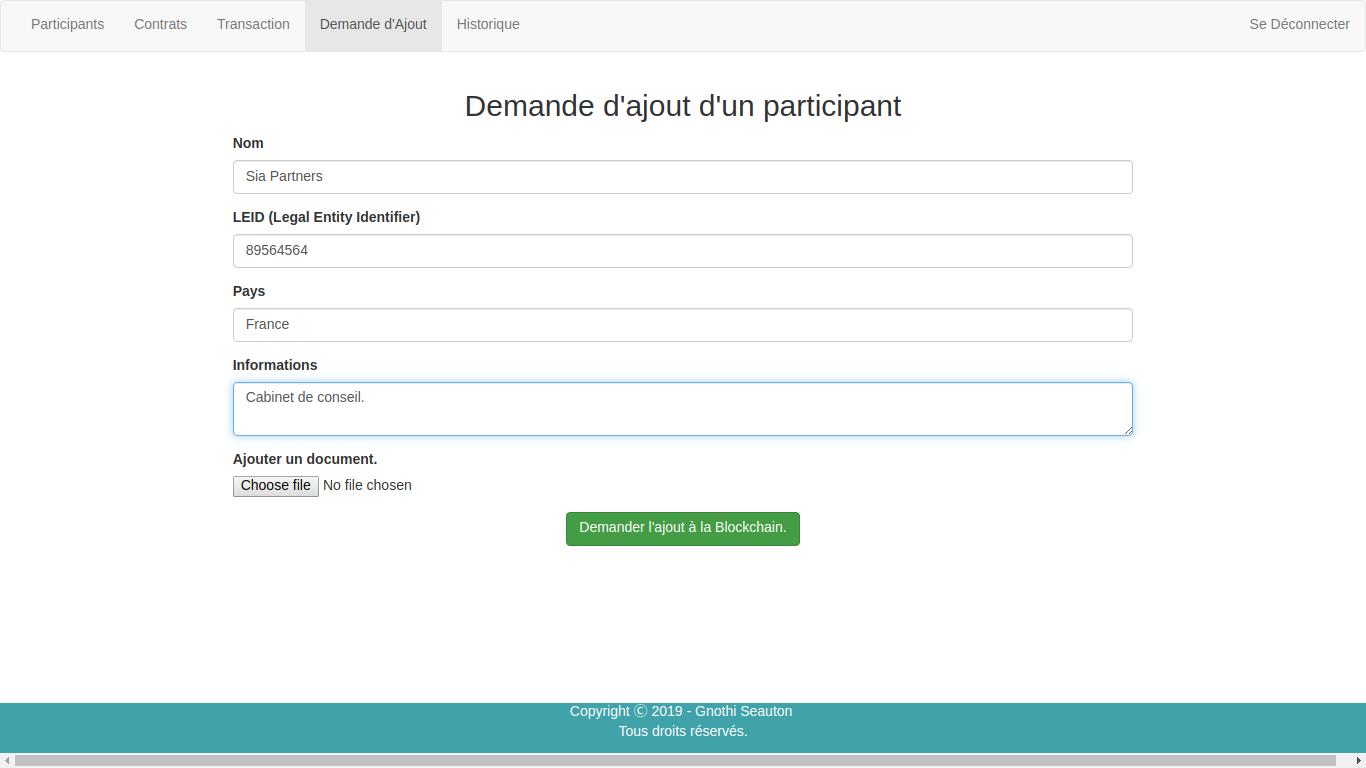
Request to add a new company to the blockchain.
When the administrator will logging again, he will get a notification and after reviewing the company (Know You Customer compliance, company checks…) he will decide if the company can be added to the blockchain and can start to receive / exchange funds provided by the NGO.
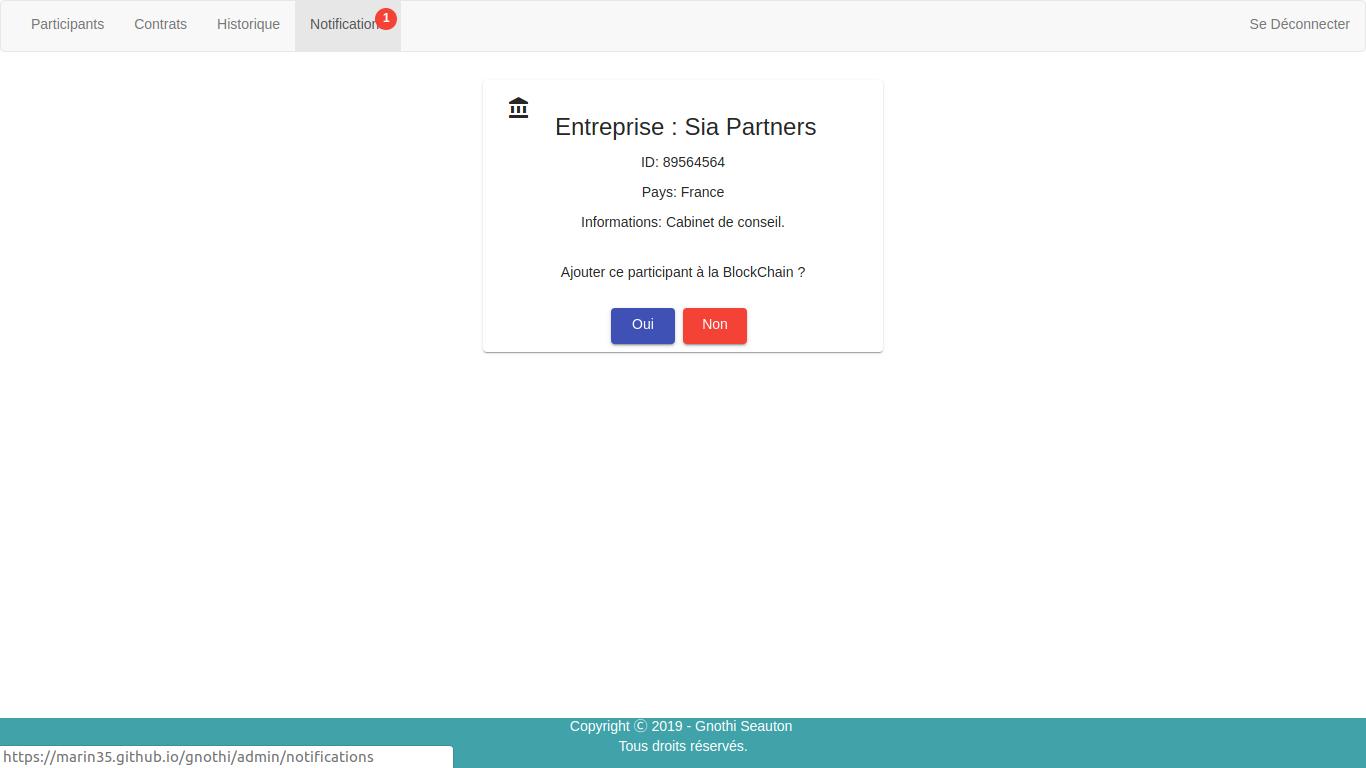
Do you want to add the company to the blockchain network ?
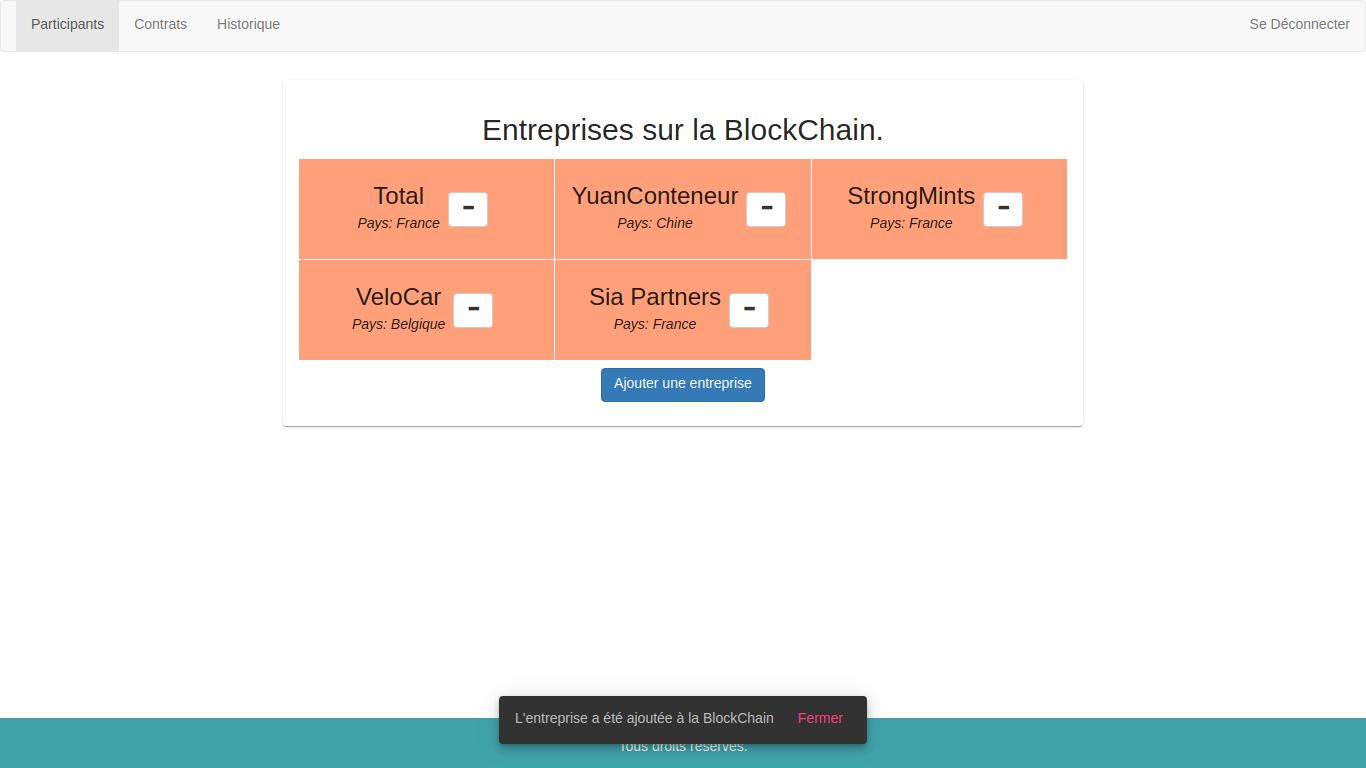
The company has been added to the blockchain!
Unfortunately this time I was not present at the presentation of our application because I was
doing a one month travel in China. However, I was still present by video conference through
WeChat application and I could answer questions relative to the technology used, how it works,
how to scale it…
Unfortunately this time we didn’t win anything (I don’t know precisely why but I guess it is due
to the fact that the application was not answering a precise business topic or something like
that), however I really appreciated this hackathon and the help of our coaches who brought us
ideas on how to use the blockchain…
For me it was a great opportunity to deep dive in Angular and Web application but also to become
more familiar with the different technologies used for the blockchain and to kinda demystify how
Ethereum & Hyperledger were working !
Ah, and for those who are wondering what ‘Gnothi Seauton’ it is just the equivalent of ‘Know
yourself’ in ancient greek.
You can find the code for this application here.